 2TradeAsia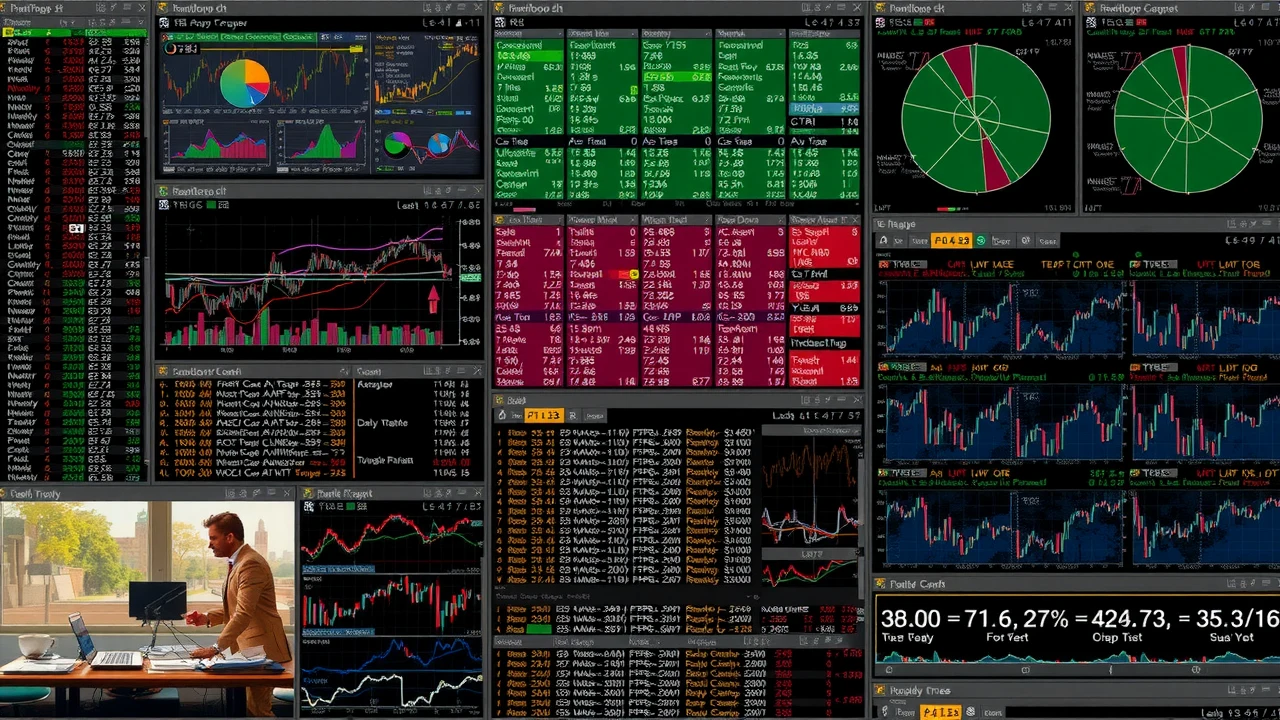
The best strategy on 2TradeAsia follows from what the platform is: a cash equities broker for the Philippine Stock Exchange. That means buying real shares, paying 0.25% commission rather than trading constantly, and using conditional-order tools to remove emotion from entries and exits.
There is no leverage to amplify a fast call, no shorting, and no forex pairs. The "best" approach here is not the busiest one. It is the one where your costs stay small, your position sizes stay sane, and your plan survives a bad week.
The Best Strategy in Short
Buy quality PSE-listed names or REITs in tranches, hold them long enough for the trade to clear its own costs, and use 2TradeAsia Plus to automate your buy and sell triggers.
The reasoning is mechanical. Every round trip on this platform costs you commission of 0.25% or PHP 20, whichever is higher, plus 12% VAT on that commission, plus the PSE fee of 0.005%, the SCCP fee of 0.01%, and a 0.6% sales tax when you sell. Stack those up and a quick in-and-out trade has to beat roughly 1% in friction before you make a single peso.
A strategy that trades five times a week is fighting that drag every single day. A strategy that buys in two or three tranches and holds for months barely notices it.
Two Ways to Trade 2TradeAsia
There are two interfaces here, and they suit different kinds of traders.
The standard 2TradeAsia.com web platform is a straightforward order-entry screen. You log in, you see the market, you place a buy or sell order at your price, and you wait. That is enough if you check in once a day or once a week.
2TradeAsia Plus is the version with automated and conditional-order tools. This is where a strategy actually lives. You set a condition, say "buy 1,000 shares if the price drops to this level," and the platform executes it for you without you watching the screen. For anyone with a day job, this is the difference between having a plan and having a wish.
| Feature | Web Platform | 2TradeAsia Plus |
|---|---|---|
| Order entry | Manual, per trade | Manual plus conditional orders |
| Automation | None | Automated triggers and rules |
| Best for | Long-term holders, occasional buys | Traders with defined entry and exit rules |
| Screen time needed | Low | Low, once rules are set |
| Account requirement | Online trading account | 2TradeAsia Plus enrollment |
If you are new, start on the standard platform for a month. Get used to lot sizes, board lots, and how PSE prices move. Then move to Plus when you have rules you actually trust.
Costs That Shape a Strategy
Costs do not sit beside your strategy. They are the strategy, especially at this fee level.
On a single sell transaction, which carries the extra sales tax:
| Cost item | Rate | Applies to |
|---|---|---|
| Broker commission | 0.25% or PHP 20, higher of | Buys and sells |
| VAT on commission | 12% of commission | Buys and sells |
| PSE transaction fee | 0.005% | Buys and sells |
| SCCP fee | 0.01% | Buys and sells |
| Sales tax | 0.6% | Sells only |
Two things jump out. First, the PHP 20 minimum means small trades are proportionally expensive. If you buy PHP 5,000 worth of stock, the PHP 20 floor is 0.4%, not 0.25%. Your effective cost is higher than the headline rate.
Second, the minimum deposit to fund an account is PHP 25,000. That sets the practical scale. At that size, one round trip costs you roughly PHP 250 in total friction. If your target profit per trade is PHP 500, you are giving away half of it.
The strategy implication is blunt: trade less often, size positions larger relative to the PHP 20 floor, and let winners run past the cost line.
Position Sizing Basics
Position sizing means deciding how much of your account goes into one trade before you enter it. On a cash equities account with no leverage, you cannot lose more than you put in, which is a real safety feature. But you can still lose 100% of a single position if the company goes to zero, and you can lose 30% in a week if you pick badly.
A workable starting rule for a PHP 25,000 account: never put more than PHP 5,000 into a single name, and never hold more than five names at once. That gives each position a 20% weight and caps the damage from any one mistake at a fifth of your capital.
Then set your exit before you enter. A common approach is a 15% stop on the downside and a 30% target on the upside. That is not a magic formula. It is a structure that stops you from holding a loser for six months hoping it comes back.
| Account size | Max per position | Max positions | Cash buffer |
|---|---|---|---|
| PHP 25,000 | PHP 5,000 | 5 | Keep PHP 5,000 uninvested |
| PHP 50,000 | PHP 10,000 | 5 | Keep PHP 10,000 uninvested |
| PHP 100,000 | PHP 20,000 | 5 | Keep PHP 20,000 uninvested |
The cash buffer matters more than beginners expect. It lets you buy a dip without selling something else, and it keeps you from being forced into a bad exit.
Automating Entry and Exit
The strongest argument for 2TradeAsia Plus is not speed, it is discipline. Conditional orders remove the moment where you stare at a falling price and decide to "wait a bit longer."
Set the condition, walk away, let the platform do the work. Three rules that hold up well on PSE names:
- Set your buy trigger at a level you decided on before the market opened, not after you saw the price move.
- Set your sell trigger at both ends, a profit target and a stop, so the decision is already made.
- Review your rules weekly, not daily. Daily review turns into daily tinkering.
Automated orders still execute in a real market with real liquidity. A thinly traded stock can gap past your trigger, and you may fill at a worse price than you set. Automation removes emotion, not market risk.
Funding and Timelines
2TradeAsia funds accounts through bank transfer and online banking channels, with a minimum deposit of PHP 25,000 and PHP as the settlement currency. There is no currency conversion drag here, which is a quiet advantage over offshore brokers where you fund in USD and absorb a 1-3% PHP-USD spread on the way in and out.
The trade-off is speed. Local bank channels settle on banking hours, so a deposit made on a Friday afternoon may not be tradeable until the next business day. Plan around the PSE session, which runs Monday to Friday from 09:30 to 12:00 and 13:00 to 14:45 Philippine Standard Time.
Deposits are bank-channel only. There is no e-wallet rail like GCash or Maya here, and no card funding. If your money sits in an e-wallet, you move it to a bank first.
| Funding detail | What you get |
|---|---|
| Methods | Bank transfer, online banking |
| Minimum deposit | PHP 25,000 |
| Settlement currency | PHP |
| E-wallet support | Not offered |
| Best timing | Before 09:30 PhST on a trading day |
The Catch Nobody Mentions
Three limits define what you can and cannot do on this platform, and a strategy has to respect all three.
First, no retail forex and no CFD trading. This is a Philippine Stock Exchange cash-market account, so your universe is PSE-listed equities and REITs. Leverage is not available here, and that means anyone looking for 1:100 forex exposure is in the wrong place.
Second, no shorting in the retail sense. You profit when prices rise. In a falling market, your best move is sitting in cash, not betting against the index.
Third, no Islamic or swap-free account option.
For context on the wider market, the Philippines does not currently issue local retail forex or CFD dealer licences, so most Filipinos who want that exposure use offshore brokers regulated by bodies like the FCA, ASIC, or CySEC. Retail forex and CFD trading is legal for individuals here, and the SEC publishes advisories against unregistered platforms rather than banning the category. If you go that route, the criteria that matter are strong tier-one regulation, segregated client funds, transparent fees, and a long operating track record.
That is the fork in the road. Stay on 2TradeAsia for PSE equities with no leverage. Or use a well-regulated offshore broker if forex and CFDs are what you actually want. Both are legitimate choices, and they suit different goals.
Where the Risk Line Sits
A reasonable strategy on this platform looks boring from the outside. You hold cash, you buy a few names you understand, you set rules, and you do not touch anything for weeks.
The line between sensible and reckless sits at the point where your position size would hurt badly enough to change your decisions.
Three markers put you on the wrong side of that line:
- Putting your entire account into one stock, because a single earnings miss can erase a third of your capital with no stop to save you.
- Trading in and out weekly, because each round trip costs around 1% and ten trades a month is a 10% annual drag before you make anything.
- Trading without an exit rule, because a position with no stop becomes a long-term investment you never chose.
Fits if you are patient, want PSE-listed equities and REITs, prefer PHP settlement with no conversion spread, and value a domestic broker that has held its SEC licence since 18 May 2000.
Doesn't fit if you want forex or CFD exposure, need leverage to make your capital size work, want to short a falling market, or trade actively enough that the 0.25% commission and PHP 20 floor would eat your edge. In those cases, a more strictly regulated international broker with tighter spreads and leverage suited to your risk tolerance is the more honest fit, and the criteria above tell you how to pick one.


Asked and answered
What is the best trading strategy for beginners on 2TradeAsia?
Buy in tranches, hold quality PSE names or REITs, and keep each position under 20% of your account. With commission at 0.25% or PHP 20 minimum plus PSE, SCCP, VAT, and sales tax on sells, frequent trading costs roughly 1% per round trip and works against you.
Does leverage change the strategy on this platform?
There is no retail leverage to build around, so a strategy here cannot be wiped out by a margin call. Your maximum loss on any position is what you paid for it. That shifts the whole approach toward position sizing and holding period rather than stop distance.
How much do I need to start a strategy here?
The minimum deposit is PHP 25,000, settled in PHP through bank transfer or online banking. At that size, a five-position strategy means roughly PHP 5,000 per name with a PHP 5,000 cash buffer left over.