 2TradeAsia
The essentials at a glance
- Regulation
- SEC-regulated domestic broker (PSE trading participant)
- Local licence
- SEC Philippines-licensed online broker (since 18 May 2000)
- Availability
- 2TradeAsia.com, operated by F
- Max leverage
- no retail forex
- Costs
- Commission 0.25% or PHP 20, whichever higher
- Instruments
- PSE-listed equities and REITs
- Account types
- Online trading account
- Local payments
- Bank transfer, online banking
- Funding
- Funded via bank channels
Trading products
- Forex / CFDs
- Local stocks
- US stocks
- Crypto
- Commodities
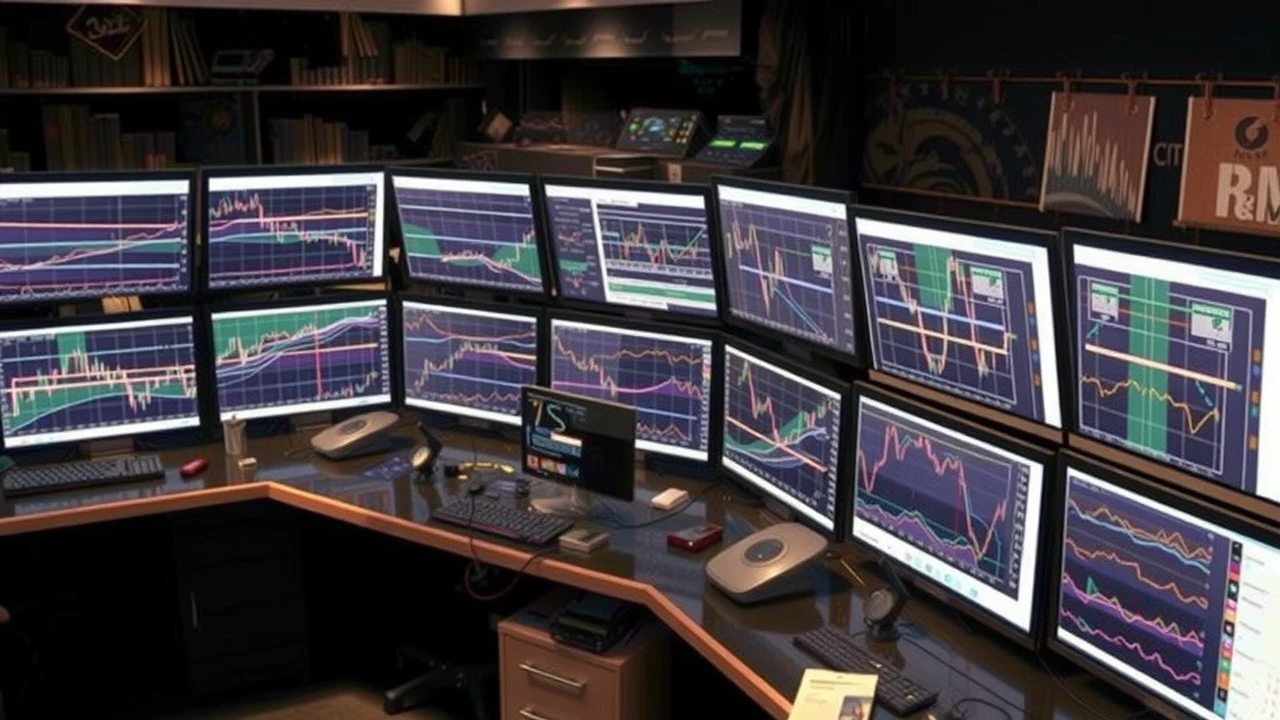
2TradeAsia is one of the few homegrown options for buying Philippine stocks from a phone, but only for PSE-listed shares and REITs. There is no forex here, no CFDs, no crypto. The broker is operated by F. Yap Securities, Inc., which has held a Securities and Exchange Commission (SEC) licence in the Philippines since 18 May 2000, and it is a Philippine Stock Exchange (PSE) trading participant. That is a real, verifiable local licence, and it puts the company in a different category from the offshore apps most Filipinos end up installing.
What You Can Trade Here
The instrument list is short and specific. Everything listed is a share or a REIT on the Philippine Stock Exchange.
- PSE-listed equities, the ordinary shares of Philippine companies
- REITs, which are real estate investment trusts, listed vehicles that collect rent from property and pay most of it out to holders
- Your cash sits in PHP, so there is no currency conversion inside the account
- No forex pairs, no CFDs, no commodities, no international shares
The PSE trades Monday to Friday in two sessions, roughly 09:30 to 12:00 and 13:00 to 14:45 Philippine Standard Time. There is no extended-hours trading, no overnight session. A phone-based trader here is not reacting to US market news at 2 a.m. You look at your positions during the local day, or you set a conditional order and let it sit.
How the Mobile Experience Works
The desktop browser version and the phone version are not the same thing in practice. 2TradeAsia runs a web-based platform that you open in a mobile browser, plus a second product called 2TradeAsia Plus, which adds automated and conditional-order tools.
Conditional orders are instructions that fire on their own when a price condition is met. You set them so you do not have to be staring at the screen at 11:40 when the morning session is closing. On a phone, that matters more than on a desktop, because nobody holds a browser tab open for four hours.
A few things worth knowing.
The web platform is not a native app you install from the app store. You use it through the browser, which means the experience depends on your phone and your signal. On a stable connection in Metro Manila, it is workable. On patchy mobile data, expect the page to reload more than you would like during a fast-moving session.
Order entry is not instant the way a one-tap trading app makes it feel. You place an order, it goes to the exchange, and it fills only if there is a matching counterparty at your price. That is how a real stock exchange works, and it is different from the offshore CFD apps that fill you instantly against the broker.
Verification before trading is not optional. You will need a government photo ID, and the accepted list in the Philippines usually means PhilSys National ID, a passport, a driver's licence, or a UMID, plus proof of address like a utility bill or bank statement. Some brokers also ask for a selfie or liveness check.
Account Types And Minimums
There are two ways in, and the deposit rule is the same for both.
| Account | What it adds | Minimum deposit |
|---|---|---|
| Online trading account | Standard web order entry | PHP 25,000 |
| 2TradeAsia Plus | Automated and conditional-order tools | PHP 25,000 |
| Islamic / swap-free variant | Not offered | N/A |
| Base currency | PHP only | N/A |
PHP 25,000 is the entry ticket. For a first-time investor that is a real amount of money, roughly the price of a mid-range phone, so treat the first deposit as tuition and not as a portfolio.
Swap-free accounts, sometimes called Islamic accounts, are not available here. The Philippines has a Muslim minority concentrated in Mindanao and BARMM, and for observant clients that means this broker is simply not an option on that count. Plenty of offshore brokers offer a swap-free version on request.
Fees In Plain Numbers
Cost is where a first-timer gets quietly hurt, because the commission is only part of the bill.
| Charge | Amount | When it applies |
|---|---|---|
| Broker commission | 0.25% or PHP 20, whichever is higher | Every buy and sell |
| VAT on commission | 12% | On top of the commission |
| PSE transaction fee | 0.005% | Every trade |
| SCCP fee | 0.01% | Every trade |
| Sales tax | 0.6% | On sells only |
The commission floor is the detail people miss. On a small order, PHP 20 is the real rate. Buy PHP 5,000 of stock and PHP 20 plus VAT is 0.4% going in, and you pay the sell side too. Round-trip costs on small tickets add up faster than the headline 0.25% suggests.
SCCP is the Securities Clearing Corporation of the Philippines, the body that settles trades between brokers. You are not paying it directly; it is passed through, and it is small.
Add the 0.6% sales tax on the sell side and the whole round trip on a typical small trade can land in the region of 1% or more. On a PHP 25,000 position that is a few hundred pesos each way. That is the number to hold in your head when you are deciding whether a 2% move is worth taking.
Leverage And What It Means Here
There is no retail forex and no CFD book at this broker. Margin is limited to what the PSE cash market allows, which for most retail stock accounts in the Philippines means you are buying with your own cash, not with borrowed money.
That is a meaningful difference, and it cuts both ways. You cannot lose more than you put in because you were never leveraged in the first place. But you also cannot use a small deposit to control a large position, which is exactly what the offshore forex apps advertise.
For context, the BSP's Circular No. 969 from 2017 framed retail FX leverage at around a 1:25 maximum for products offered locally, and because there is no active SEC-licensed retail CFD regime, offshore brokers routinely advertise 1:100 up to 1:500 or more to Filipino clients. Reform talk about tightening CFD leverage toward 1:20 to 1:30 has circulated, but as of this review nothing is confirmed as enacted.
The Licence, Honestly
2TradeAsia is a domestic Philippine broker supervised by the SEC, licensed since May 2000, and a PSE trading participant and SCCP member. What that supervision does not cover is offshore forex or CFD activity, because the SEC does not currently issue local retail forex or CFD dealer licences at all. That is a gap in the local regime, not a fault in this broker. If you want currency or CFD exposure, the decision moves to a different question: which offshore regulator oversees the firm, and is it one whose rules actually protect you. Verify any firm's registration at sec.gov.ph and the eRAMP portal, and check current warnings at the SEC advisories page.
That is the split to keep straight: local licence for local products, and a separate, stricter set of criteria for anything offshore.
Choosing A Broker With Real Protection
If you decide you want forex or CFD exposure, or you simply want a broker with a longer cross-border track record, the filter is not "offshore versus local." The filter is how strong the regulator is, and a handful of things you can check yourself in an afternoon.
Look for a licence from a top-tier authority, meaning one of the serious ones like the FCA in the UK, CySEC in Cyprus, or ASIC in Australia. These regimes require segregated client funds, which means your money sits in a separate account from the company's own operating cash and cannot be used to pay the firm's bills. Check whether negative balance protection applies, so a violent gap cannot leave you owing money. Read the actual fee schedule rather than the marketing page, including withdrawal charges and inactivity fees. And look at how long the firm has been operating under that licence, because a ten-year track record under one regulator says more than a fresh certificate from a lenient one.
Notice what is not on that list. The size of the sign-up bonus, the number of instruments, the design of the app. Those are the things advertising pushes, and none of them protect your deposit.
The SEC also publishes rolling advisories against unauthorised platforms. In late 2025 and early 2026 the named list included Exness and HFM/HF Markets around 12 December 2025, Interactive Brokers, VT Markets on 7 January 2026, and FBS/FBS Markets Inc. on 8 January 2026. That list changes, so check the advisories page directly rather than trusting any list, including this one.
Taxes On Your Gains
The Bureau of Internal Revenue (BIR) treats trading profit as ordinary income, not as a separate capital gains category. That means it goes under Other Taxable Income on your annual return.
Only realised gains count, meaning positions you have actually closed. Unrealised paper gains are not taxed. Net losses can be claimed as itemised deductions if you qualify.
Resident individuals pay the TRAIN-law progressive rates: 0% up to PHP 250,000 of taxable income, then bracketed all the way up to 35% on income above PHP 8,000,000. Resident citizens are taxed on worldwide income, while non-residents pay a flat 25% on Philippine-sourced income.
Funding And Getting Paid
Money moves by bank transfer and online banking. There is no e-wallet rail listed here, which is worth noting because GCash and Maya are how most Filipinos move money day to day.
| Method | Speed | Notes |
|---|---|---|
| Bank transfer | Typically 1-3 business days | Standard route in and out |
| Online banking | Depends on your bank | Same rails as above |
| GCash / Maya e-wallet | Not listed for this broker | Common with offshore brokers instead |
| Minimum deposit | PHP 25,000 | Applies to both account types |
For offshore brokers, the picture is different. Most accept GCash and Maya, and settlement runs through InstaPay (real-time, 24/7, with a PHP 50,000 per-transaction cap) or PESONet (batch, higher value, next-cycle settlement). E-wallet deposits there are usually near-instant while withdrawals commonly take one to three business days, and because those accounts are typically USD-based, a PHP to USD conversion spread of roughly 1% to 3% applies on the way in and out.
Also worth knowing: the BSP has liberalised but still monitors foreign exchange rules. There is no blanket prohibition on funding a foreign broker account from your own funds, but buying foreign currency for certain purposes carries documentation and registration thresholds, and outward investments above BSP thresholds may need registration so you can repatriate the money through the banking system later. There is no fixed universal cap confirmed here, so check current thresholds with the BSP before you wire anything abroad.
When To Walk Away
There is a set of situations where this account is simply the wrong tool, and recognising them early saves money.
If your goal is currency trading or CFD speculation, stop here. This broker does not offer those products, and no amount of platform familiarity will change that. You would be shopping in a stockbroker for something stockbrokers do not sell.
If PHP 25,000 is money you may need in the next six months, do not put it in PSE equities. Settlement, withdrawal timing, and market movement all mean that money is not reliably available on demand.
If your entire reason for being interested is fast, leveraged, app-store-native trading with push notifications on every tick, this is a web platform on a cash market. The rhythm is slower and the instrument menu is shorter. That is the design, not a defect, but it is a real mismatch for some people.
And if you cannot or will not complete KYC with a government ID and proof of address, nothing happens at all. Verification is the gate, and it is not waivable.
None of that is a reason to avoid regulated online investing. It is a reason to match the account to the plan, and to check whether a more strictly regulated international broker with segregated client funds and a top-tier licence fits your plan better than a domestic cash-equity account does.


Measured against the alternative
| Feature | 2TradeAsiaOur pick | FxPro |
|---|---|---|
| Regulation | SEC-regulated domestic broker (PSE trading participant) | FCA · CySEC · FSCA |
| Max leverage | no retail forex | 1:30 (EU) · 1:500 (global) |
| Instruments | PSE-listed equities and REITs | FX, indices, shares, metals, energies, crypto CFDs |
2TradeAsia does not match a fully regulated top-tier broker because the available review material presents it as a local broker tied to SEC registration and PSE accreditation rather than to a top-tier regime with the stronger investor-protection framework that typically includes strict segregated client-money rules and an external compensation scheme. Practically, that means a trader gives up the added layer of formal payout protection if the broker fails, plus the extra confidence that client funds are ring-fenced and overseen under a more demanding supervisory standard.
What it adds up to
- 2TradeAsia offers competitive trading conditions
- Account opening is quick and fully online
- Demo account available before funding real money
- Web and mobile access without extra software
- Verify current terms before depositing
- Terms and costs can change without notice
- Support and documents may not be in your local language
- Leveraged trading can wipe out the deposit quickly
Frequently asked
Is 2TradeAsia available to residents of the Philippines?
Yes. It is a domestic broker operated by F. Yap Securities, Inc., SEC-licensed since 18 May 2000, and a PSE trading participant. Accounts are funded in PHP through bank transfers and online banking, with a minimum deposit of PHP 25,000.
Is it legal to trade forex or CFDs from the Philippines?
Retail forex and CFD trading is legal for individuals in the Philippines. What does not exist is an SEC licensing regime issuing local retail forex or CFD dealer licences, so Filipinos who want that exposure generally use offshore-regulated brokers. Selling or soliciting investments without SEC registration is unlawful, and the SEC publishes advisories against unauthorised firms at sec.gov.ph. Verify any firm through the SEC and the eRAMP portal before funding.
Can I trade forex or CFDs with 2TradeAsia?
No. The platform covers PSE-listed equities and REITs only, with no retail forex and no CFD book. Margin is limited to what the PSE cash market allows. If forex or CFD exposure is what you want, you will need a broker that offers it, and the sensible filter is a top-tier licence such as the FCA, CySEC, or ASIC, with segregated client funds and negative balance protection.
How much do I need to open an account?
PHP 25,000 is the minimum deposit, and it applies to both the standard online trading account and 2TradeAsia Plus, which adds automated and conditional-order tools.
What documents do I need to sign up?
A government-issued photo ID, which in the Philippines usually means a PhilSys National ID, passport, driver's licence, or UMID, plus proof of address such as a utility bill or bank statement. Some brokers also require a selfie or liveness check as part of verification.